Existential
Studio: Long Island University - Existential
Role: Creator, Creative Designer
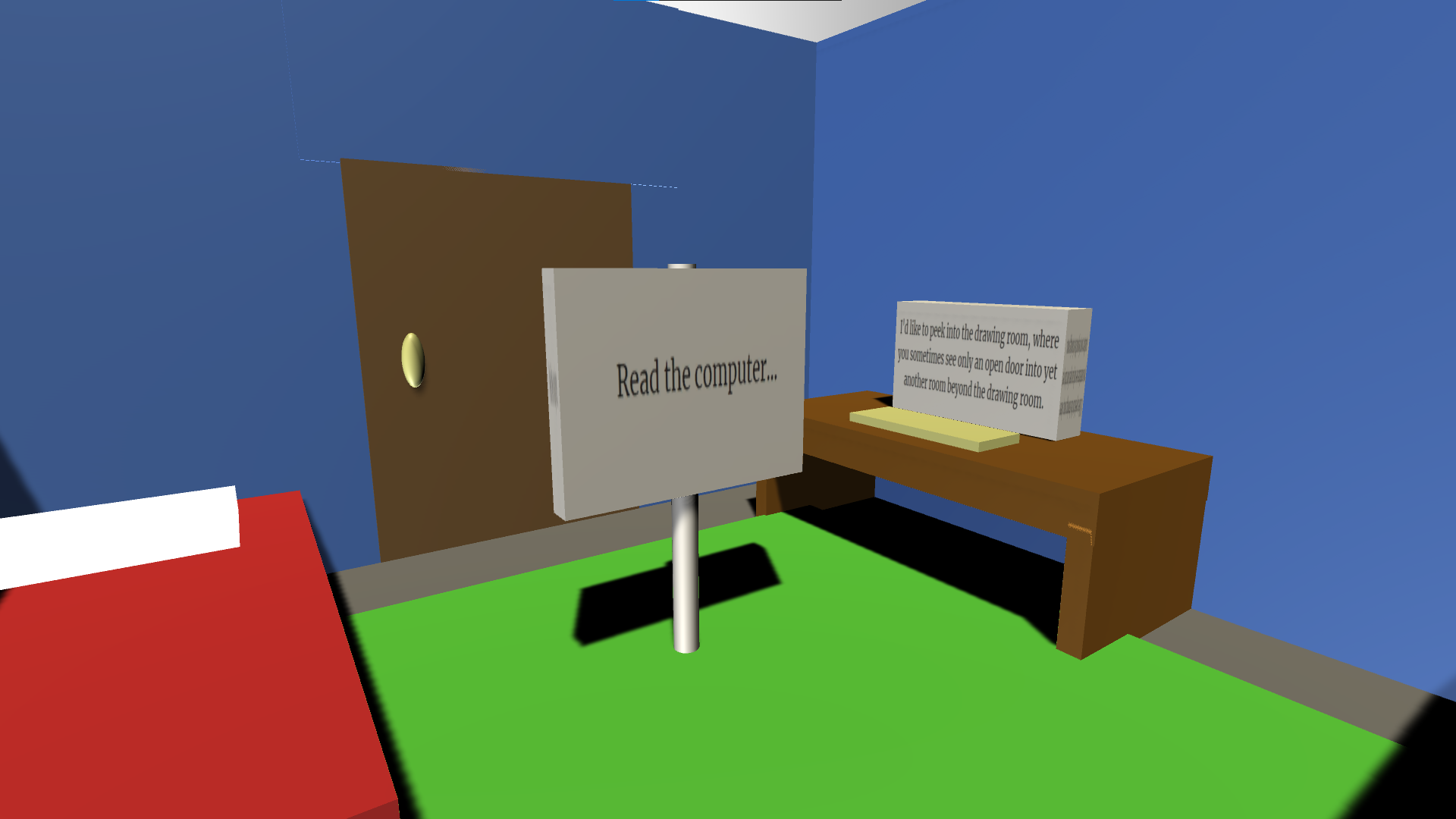
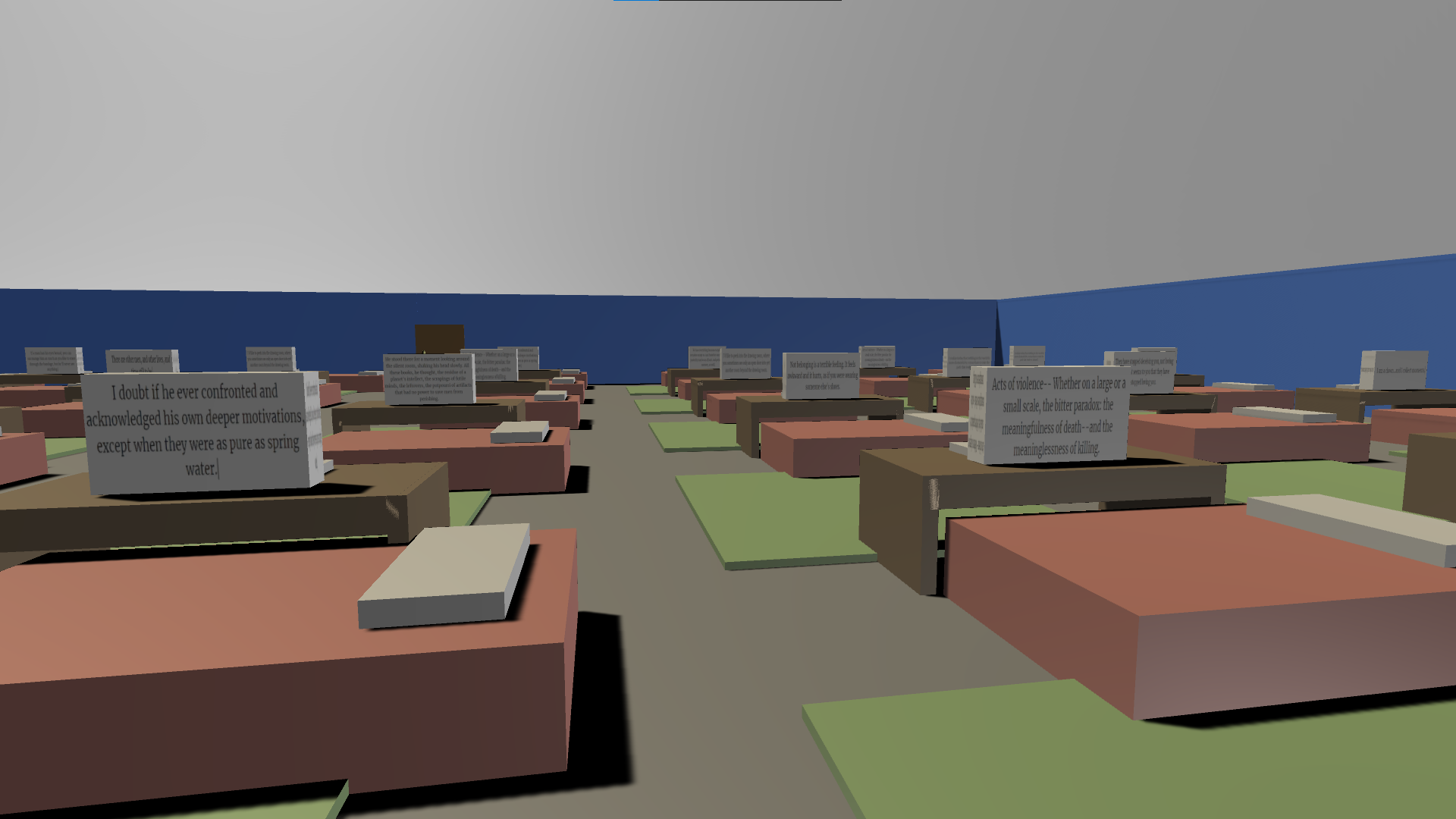
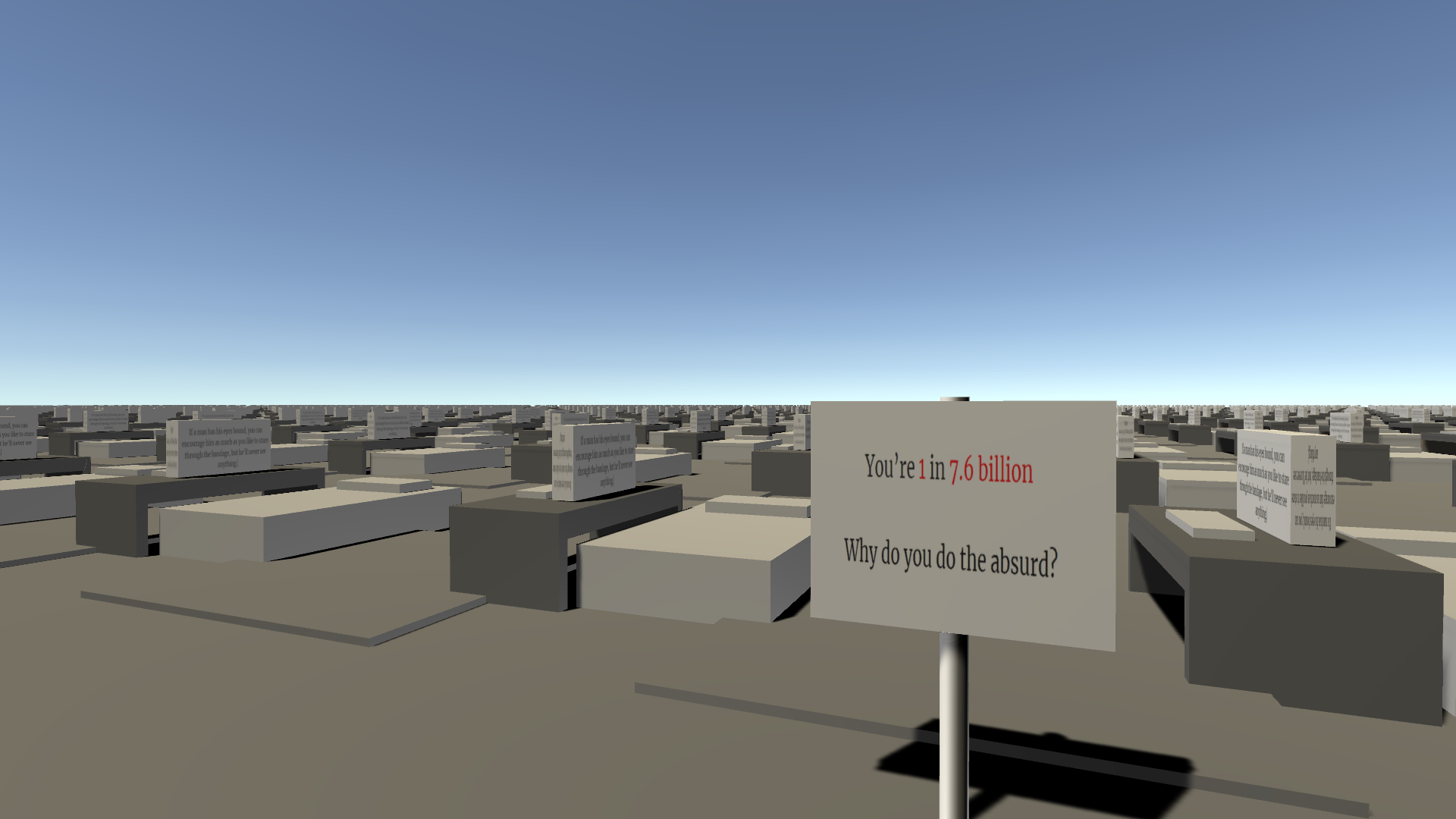
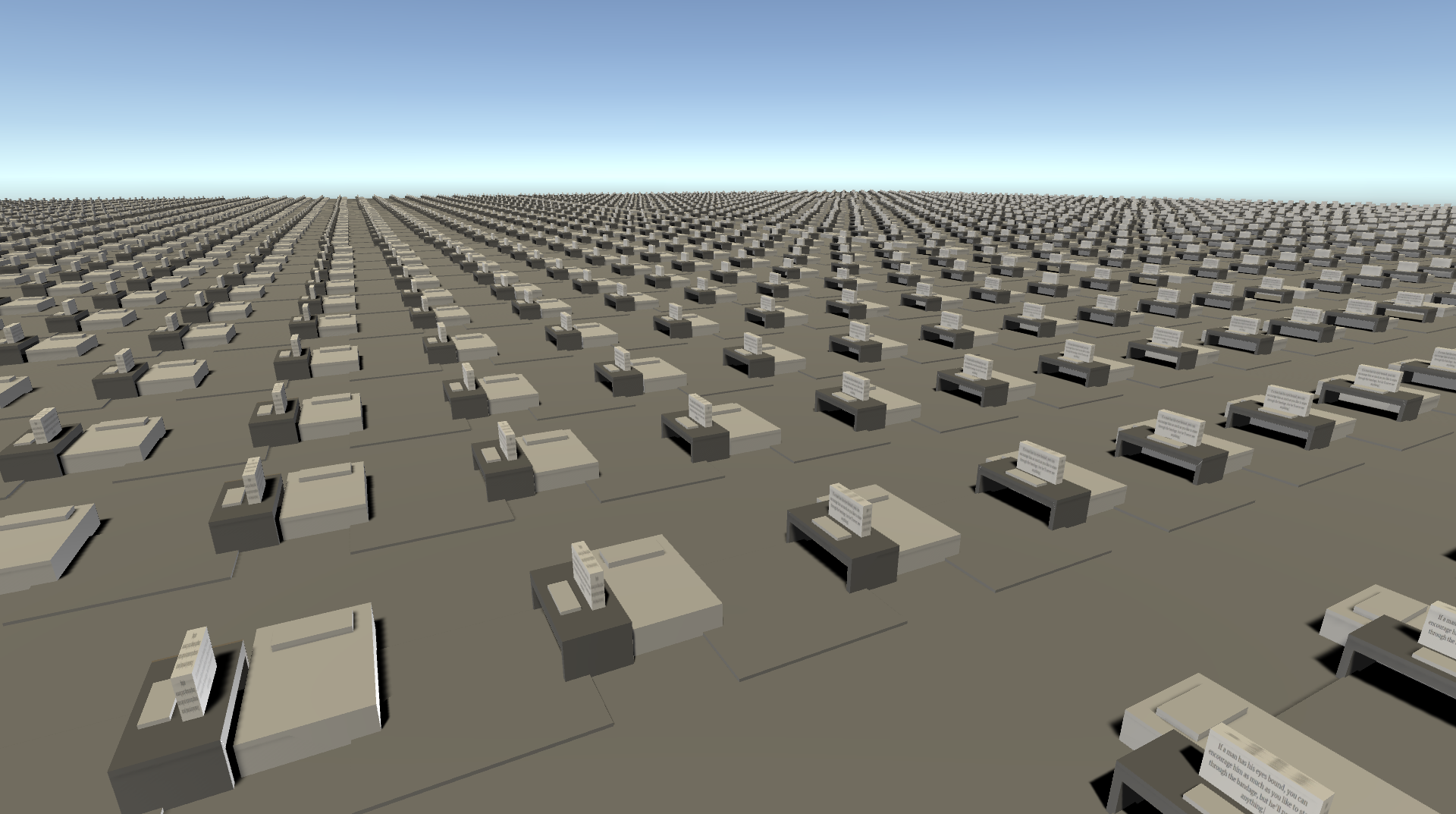
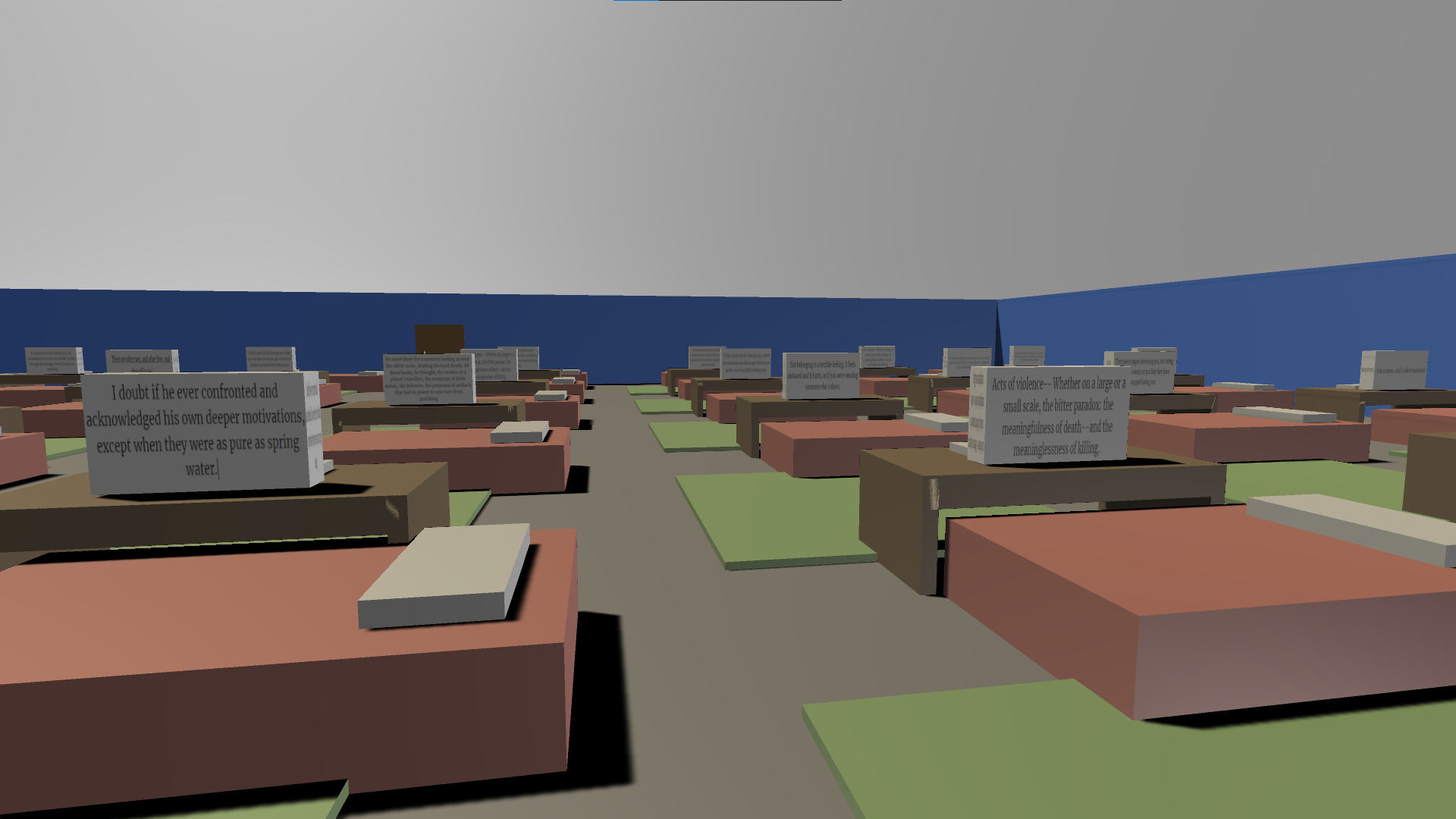
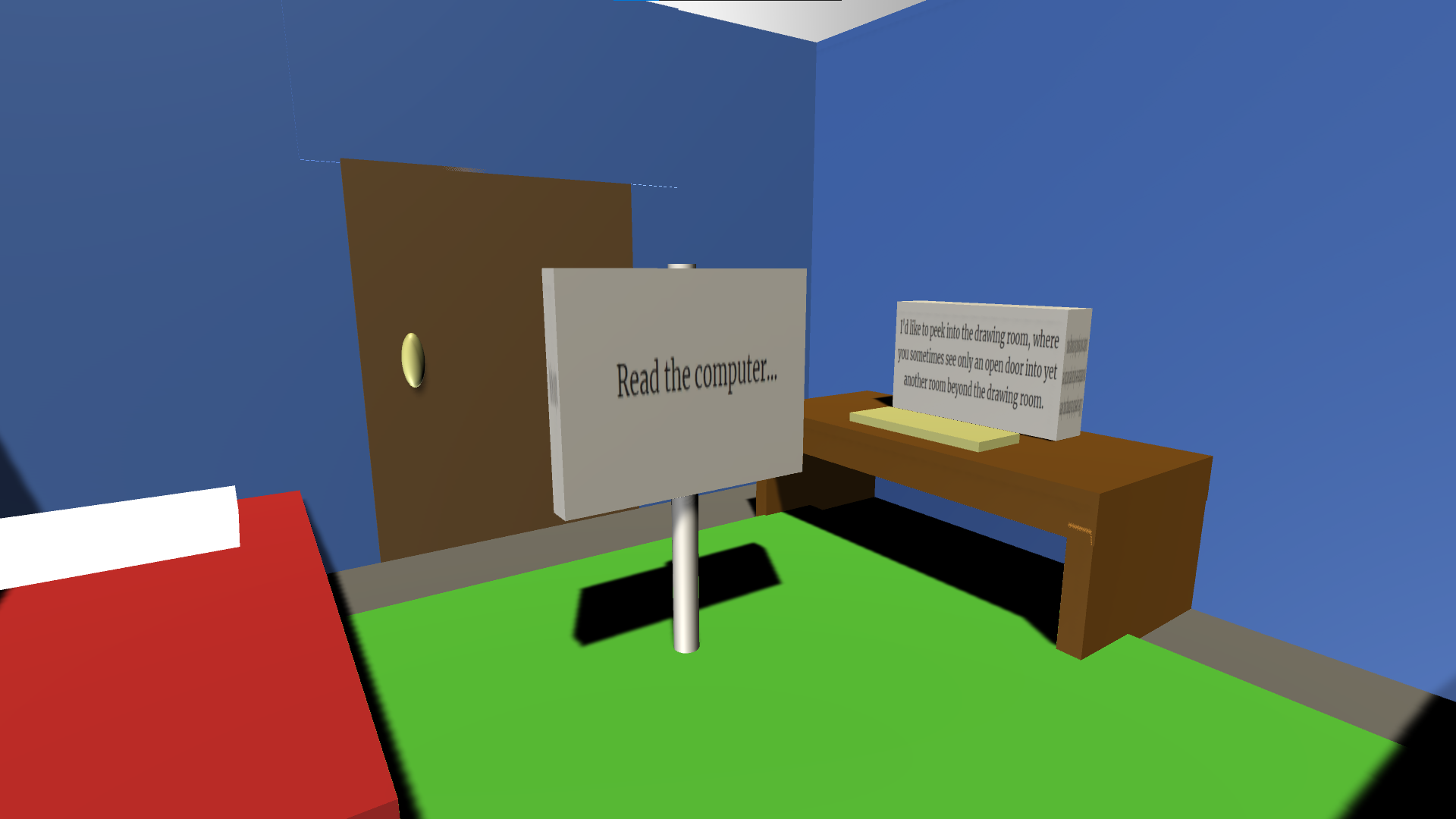
Project Summary: Existential is a walking simulator that explores feelings of isolation and existential reflection. Players begin in a bright, cozy bedroom and gradually progress into larger, muted environments, eventually arriving at a vast open field containing 8,000 repetitive bedroom setups, each displaying snippets of existential philosophy on computer screens. The game conveys emotional progression through environmental storytelling, scale, and subtle color shifts rather than traditional mechanics or dialogue.
Responsibilities:
Designed the environments and progression, emphasizing color, scale, and repetition to evoke emotional impact.
Crafted the player’s journey to gradually shift from comfort to existential reflection.
Implemented minimal interaction to focus attention on observation and environmental storytelling.
Curated and placed philosophy snippets on screens to enhance narrative without explicit exposition.
Iterated on pacing, repetition, and scale to balance engagement and emotional resonance.
Engine: Unity
Core Concepts
The goal we set out to achieve was to make a game that explores the dread of existentialism through a very simple setting, and minimal words.
We start the player in a bright and colorful room with a simple setup of a bed, rug, and computer desk, establishing a sense of comfort and satisfaction.
Gradually, the familiar environment fades in color and grows in scale, becoming increasingly overwhelming and disorienting as the player progresses from room to room.
Environmental Design
The environments were intentionally designed to fatigue and overwhelm the player, reinforcing the emotional weight of existential reflection.
Scale and repetition were carefully adjusted to amplify disorientation and immersion, while pacing guided players through the gradual escalation.
Color and layout shifts were tested to intensify the growing sense of isolation as the world expanded.
Player Interaction
To immerse players in the experience, we implemented traditional FPS controls, allowing them to navigate the environment freely.
Players can explore at their own pace, with full agency to engage with the environment as they choose. While we debated making reading every computer mandatory, most players naturally spent significant time exploring, so we prioritized freedom over forced progression.